Adopt new tools
We continuously evaluate emerging AI tooling and fold what earns its place into how we design, build and ship.
Boolean Solutions is a trusted technology partner for SaaS companies and startups, delivering end-to-end web and mobile development, AI, and product consulting that turns bold ideas into scalable digital products.
Schedule a CallAI-ready software development — we take your requirements and ship them through an agentic engineering process, with human judgment in the loop.
Boolean Solutions is an agentic AI development partner. We take your requirements — even AI-shaped, still-forming ones — and turn them into production software through an agentic engineering process. AI accelerates every step; our engineers own every decision. The result is custom AI solutions and products shipped faster, cleaner and more reliably.
Adopting AI is a shift in mindset, not a single tool. At each stage we ask what new tools we can adopt, how the process itself should be modified, and how the status quo can be shattered — without ever giving up engineering rigour.
We continuously evaluate emerging AI tooling and fold what earns its place into how we design, build and ship.
Every stage of delivery is re-examined for where AI removes friction — from requirements to monitoring.
If a faster, cleaner path exists, we take it. We do not do things a certain way just because that is how they were always done.
AI proposes; our senior engineers decide. Judgment, ownership and accountability stay human.
AI can raise costs in the short term — we invest in the right tools, eval harnesses and guardrails up front. Over the life of a product that investment compounds: features are delivered faster, cleaner and cheaper, and the cost per feature keeps dropping.
One loop, end to end. AI accelerates every stage; a human owns the outcome at each one.
We interact with AI to pin down what you actually mean, and generate quick mockups so intent is visible early — not three months in.
We turn mockups into real designs with professional help, using Figma and Claude/Figma Make, building prototypes early so you see the end output early.
Features go into development with system-design principles applied and thought through for your current scale and real client needs.
We add automated tests so we have real confidence in every feature before it moves forward.
AI reviews the code first — but final approval and the decision always rest with our engineers, who apply their knowledge to craft better solutions.
human-approval: trueEach feature is backed by a PRD, a design doc and decision logs wherever they add clarity — so the “why” is never lost.
A CI/CD pipeline delivers continuously while preserving engineering principles, and feature flags let us test new features on a subset of customers.
We measure outcomes with tools like Mixpanel, custom dashboards or open-source analytics — so decisions follow evidence, not opinion.
Listen for errors with monitoring like Sentry, watch performance with APM, and evolve infrastructure based on real traffic and scale.
Human-in-the-loop, by design. AI accelerates the loop, but our engineers review and sign off before anything ships — you get AI speed with the confidence of human quality, all the way to production.
Client participation is as important as our engineering. The teams that get the most from us show up on a regular cadence — reviewing early, sharing context, and deciding quickly. Partnership, not hand-off, is what makes agentic delivery fast and right.
Every client is unique, every problem is unique, and traffic needs vary. We design solutions accordingly — and we do not over-scale.
We start from your problem, not a template, and choose the stack that fits where your business actually is.
Infrastructure is matched to your traffic and growth — enough headroom to be safe, without paying for scale you do not need.
We avoid premature complexity and add capability as the product earns it, keeping cost and maintenance in check.
We can own your infrastructure and handle payments securely. Security is audited for every feature and beyond, with OWASP guidelines kept in mind at all times — including prompt-injection and guardrail defences for AI systems.
Explore Security & ComplianceAgentic engineering is our way of building software where AI accelerates every step of the lifecycle - discovery, design, coding, testing, review, deployment and monitoring - while senior engineers own every decision. AI drafts, retrieves and reviews; humans approve. You get AI speed with the confidence of human quality.
AI assists with a large share of the work and even performs a first-pass code review, but the final approval and the responsibility for quality always rest with our engineers. Every change is reviewed by a human and covered by automated tests before it ships.
In the short term AI can raise costs - we invest in the right tools, eval harnesses and guardrails. Over the life of a product that investment pays back: features are delivered faster, cleaner and cheaper, and the cost per feature keeps dropping. We have shipped enterprise-grade software this way.
Results come from partnership. We ask for a regular cadence - availability for reviews and demos, domain context, timely decisions, and access to the systems and data a feature needs. The more you participate, the better and faster the outcome.
We gate new features behind flags and test them on a subset of users, ship through CI/CD, then monitor live: error monitoring, APM for performance, and analytics with tools like Mixpanel or open-source equivalents. Infrastructure is tuned to your real traffic and scale rather than over-provisioned.
Security is audited for every feature and beyond, with OWASP guidelines kept in mind throughout. We handle infrastructure and payments securely, apply least-privilege access, and add prompt-injection and guardrail defences on any untrusted input to AI systems.
We are provider-agnostic. For agents we use LangGraph, LangChain, CrewAI, LlamaIndex and RubyLLM; for retrieval, pgvector, Pinecone or Qdrant; for evals and tracing, Langfuse; for design, Figma and Figma Make; for delivery, CI/CD with AI code review in Claude Code and Cursor; and for insight, Mixpanel, Sentry and APM tooling.
What this looks like once it is live: the output contract, the capability boundary, the human gate, and what it changed.
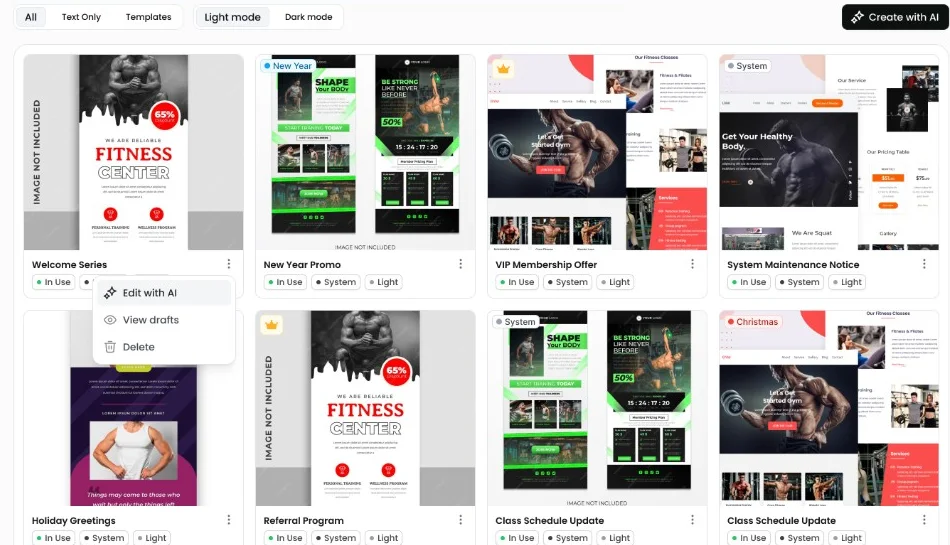
A wide catalogue of transactional templates that customers never finished configuring, closed by generated drafts that a human still has to approve.
<30 min to brand all 114 templates
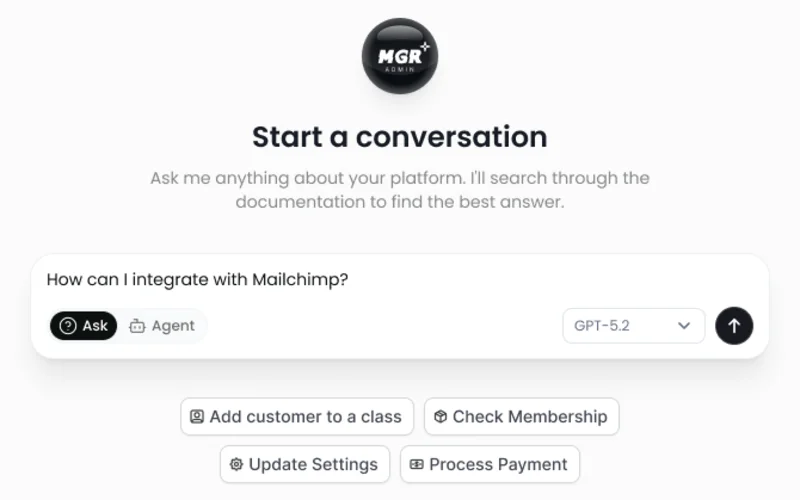
A support team answering the same procedural questions by hand, replaced by an assistant that quotes the guide in full, queries live data, and writes only what it was structurally permitted to write.
43 tools across three specialist agents
Bring it to a discovery call. We will tell you what we would do with agentic engineering — and what we would leave alone.
Tell us about your web, mobile, or agentic AI project — we'll get back with a tailored proposal, usually within a business day.