Knowledge assistants
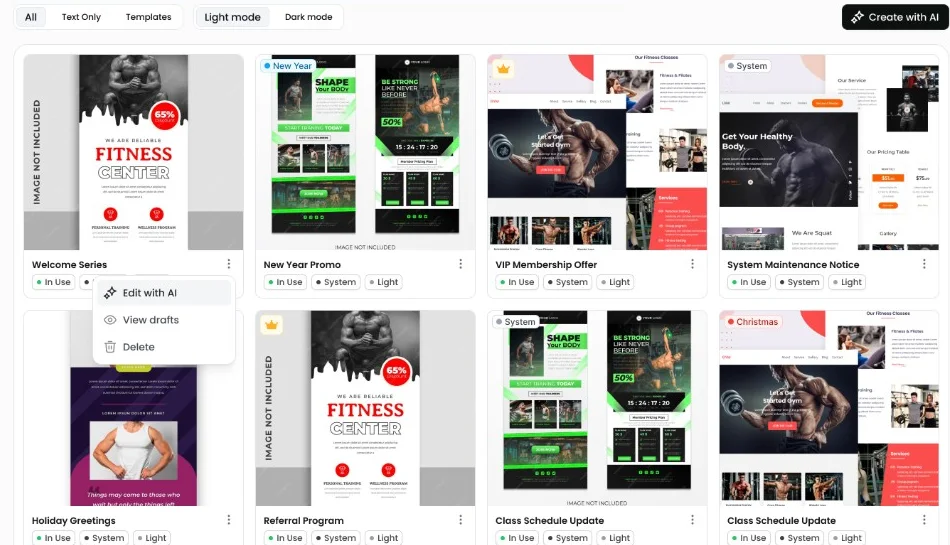
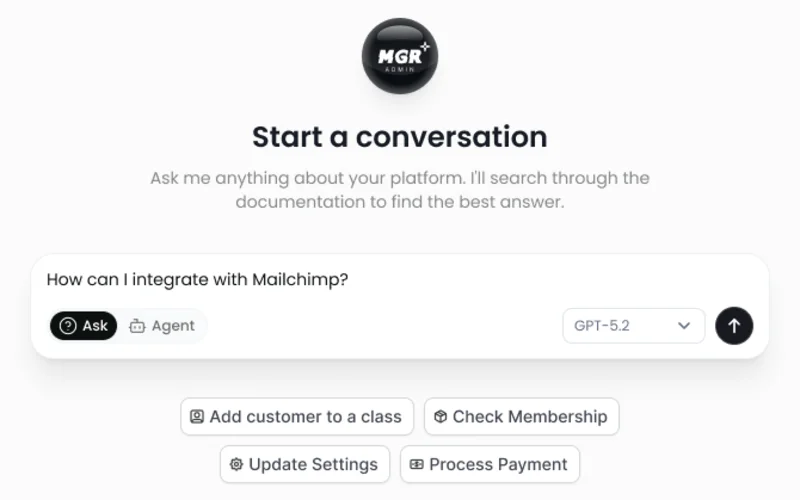
Answer questions over your documents, tickets and wikis with citations, so users can verify rather than trust blindly.
Boolean Solutions is a trusted technology partner for SaaS companies and startups, delivering end-to-end web and mobile development, AI, and product consulting that turns bold ideas into scalable digital products.
Schedule a CallAgents, RAG and LLM features that survive contact with real users — measured, not guessed.
The hard part of AI is not calling a model. It is knowing whether the answer was right, catching it when it drifts, and keeping cost and latency inside something a business can live with. We build agentic systems with that measurement baked in from the first sprint.
Five layers, each with its own failure modes. Most AI projects stall because one of them was treated as an afterthought — usually evaluation or retrieval quality.
Chat, copilot, batch job or a plain API. Streaming responses, cancellation, and a human-in-the-loop approval step wherever a wrong action would be expensive.
Planning, tool calling, state and hand-off between agents. Explicit graphs over implicit prompt chains, so behaviour is inspectable and testable.
Ingestion, chunking, an embedding model and a vector store, with hybrid search and re-ranking on top. Agentic RAG where the agent decides what to look up rather than stuffing one query into context.
Model selection and routing, structured outputs, fallbacks when a provider degrades, and cost controls that keep a runaway loop from becoming an invoice.
Tracing, eval suites run in CI, regression alerts on prompt changes, plus latency and token dashboards. This is what turns a prototype into something you can change safely.
We have shipped agentic features inside Rails, Node and Python codebases, so the AI layer fits the application you already have rather than arriving as a separate Python service nobody wants to maintain.
The patterns we build with, chosen per problem — a single well-grounded RAG call often beats a crowd of agents.
Default: LangGraph when control flow matters, because an explicit state graph is far easier to debug and evaluate than a chain of prompts.
 LangGraph
 LangChain
Rails shops rarely want a bolt-on Python service. We build agents natively in Ruby using RubyLLM and Langchain.rb, and have worked with the AI Agents SDK that came out of Chatwoot.
 RubyLLMLangchain.rb
 Chatwoot AI Agents SDKRuby on Rails
Python where the ecosystem is richest, Node when the agent sits next to an existing JS backend, and Jido on Elixir when you want the BEAM’s supervision model behind long-running agents.
 PythonLangGraph (Py)
 Node.jsLangGraph (JS)
 JidoElixir
Provider-agnostic by design. We route per task and keep a fallback, so a rate limit or a deprecated model is a config change rather than an outage. Self-hosted via Ollama where data cannot leave your estate.
 OpenAI
 Anthropic Claude
 Hugging Face
 Ollama
 PyTorch
Default: pgvector — if your data already lives in PostgreSQL, one less system to run usually beats a marginal recall gain. We move to a managed store like Pinecone, or a self-hosted Qdrant, once the index outgrows the database or needs to scale on its own.
 pgvector
 Qdrant
 Elasticsearch
 Redis
RedisDefault: Langfuse for tracing and eval runs. Evals live in CI next to the unit tests, so a prompt change that quietly degrades quality fails the build.
We use agentic coding tools ourselves, under the same rules we apply to any contributor: every change reviewed by a human, every change covered by tests.
Claude CodeOur bias. Start with the simplest thing that could work — often retrieval plus one good prompt — and only add agents when a task genuinely needs planning or tool use. Complexity in an AI system is paid for twice: once in latency, once in debugging.
Answer questions over your documents, tickets and wikis with citations, so users can verify rather than trust blindly.
Multi-step automation that reads, decides and acts across your systems, pausing for a human where the stakes justify it.
Summaries, drafting, classification and search added to a live application without destabilising what already works.
A prototype that impressed in a demo but misbehaves in production. We add evals, tracing and guardrails until it is trustworthy.
AI features fail quietly. These practices are what make the difference between shipping once and being able to keep changing it.
Not a capability deck — production AI features, written up with the validation contracts, the failure handling and the gaps we still own.
A wide catalogue of transactional templates that customers never finished configuring, closed by generated drafts that a human still has to approve.
<30 min to brand all 114 templates
A support team answering the same procedural questions by hand, replaced by an assistant that quotes the guide in full, queries live data, and writes only what it was structurally permitted to write.
43 tools across three specialist agents
We understand the AI industry and build every essential component of your solution — at every stage. Our loop pairs AI speed with human judgment, so you ship with confidence, not guesswork.
Shape UX/UI and validate fast with Figma & Figma Make.
Build at speed with Claude Code and AI pair-programming.
CI/CD pipelines run automated tests to stop regressions.
AI reviews every change for quality, security & standards.
Senior engineers verify AI output and own the outcome.
human-approval: trueRelease with evals & observability watching in production.
Human-in-the-loop, by design. AI accelerates every step of the loop — but our engineers review and sign off before anything ships, so you get AI speed with the confidence of human quality, all the way to deployment.
Tell us about your web, mobile, or agentic AI project — we'll get back with a tailored proposal, usually within a business day.